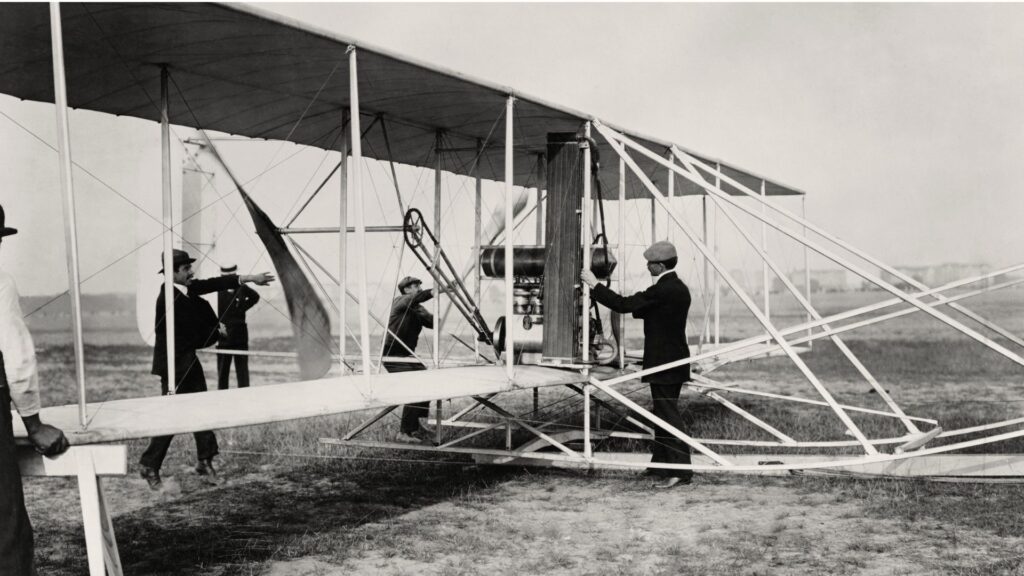

Every year, Wright Brothers Day invites us to look back at one of the most transformative moments in human history; the invention of powered flight. When Orville and Wilbur Wright lifted off the ground in 1903, they didn’t just solve a technical problem. They reshaped how humanity understood distance, possibility, and the future itself. Today, the legacy of the Wright Brothers reminds us that vision, preparation, and perseverance can change the world even when success seems impossible.
Wright Brothers History: From Bicycles to the Sky
The Wright brothers’ history didn’t begin in a laboratory or a university. It began in a modest bicycle shop in Dayton, Ohio. Orville and Wilbur were self-taught engineers, driven by curiosity rather than credentials. What set them apart was not wealth or formal training, but their methodical approach to experimentation.
They studied birds, analyzed previous aviation attempts, and, most importantly, learned from failure. While others focused solely on engines, the Wright Brothers recognized that control was the key challenge. Their breakthrough came from mastering balance and maneuverability before pursuing raw power. This disciplined, step-by-step thinking laid the groundwork for everything that followed.
Aviation Pioneers Who Redefined Possibility
As aviation pioneers, the Wright Brothers faced widespread skepticism. Many believed powered flight was unrealistic, unsafe, or simply unnecessary. Yet the brothers persisted, testing gliders at Kitty Hawk where steady winds and soft sands made learning safer.
On December 17, 1903, the Wright Flyer made history. Though the flight lasted only 12 seconds, it marked the invention of flight as we know it; controlled, sustained, and powered.
That brief moment proved that human ingenuity could overcome natural limits, setting off a chain reaction of innovation that still shapes the modern world.
The Invention of Flight and Aviation Innovation
The invention of flight sparked unprecedented aviation innovation. Within decades, airplanes evolved from fragile wooden frames to reliable machines capable of crossing oceans. Aviation revolutionized commerce, warfare, travel, and global connection.
But innovation didn’t stop with technology. The Wright Brothers’ success changed how inventors approached problem-solving:
- Test ideas incrementally
- Learn from failure instead of fearing it
- Document results meticulously
- Think long-term, not just about immediate success
These principles remain central to innovation today whether in aviation, medicine, technology, or law.
Early Aviation Milestones Built on Vision and Planning
Early aviation milestones didn’t happen by accident. They were the result of careful planning, adaptability, and a willingness to revise assumptions. The Wright Brothers understood that true progress requires structure behind the dream.
Their story offers a powerful reminder: big ideas succeed when supported by thoughtful systems. Vision alone isn’t enough; you need plans, safeguards, and clarity to ensure that progress lasts beyond a single moment.
Celebrating Visionaries and the Power of Legacy
When we celebrate the Wright Brothers, we’re really celebrating visionaries; people who think beyond the present and build something that outlives them. Their work didn’t end with their first flight; it continued through patents, teaching, and shaping the future of aviation. Legacy isn’t accidental. It’s intentional.
Just as the Wright Brothers protected their invention and documented their work, modern families think about how their values, assets, and wishes will carry forward. Planning ensures that what you build, whether a business, a family, or a lifetime of hard work, continues to serve others in meaningful ways.
Why Wright Brothers Day Still Matters Today
In a world where innovation moves faster than ever, Wright Brothers Day is a reminder that meaningful breakthroughs take patience, foresight, and responsibility. It encourages us to ask:
- What are we building for the future?
- Who will benefit from our efforts after we’re gone?
- Have we taken steps to protect what matters most?
Honoring history isn’t just about remembering the past, it’s about learning how to shape the future more wisely.
Great legacies don’t happen by chance. If you’re ready to protect what you’ve built and plan for the future with intention, contact Krause Estate Planning & Elder Law Center to start a conversation about preserving your legacy.
TL; DR
1. What is Wright Brothers Day and why is it celebrated?
Wright Brothers Day commemorates the first successful powered flight by Orville and Wilbur Wright on December 17, 1903. It honors their contribution to aviation history and recognizes the invention of flight as a turning point in human innovation.
2. Why are the Wright Brothers considered aviation pioneers?
The Wright Brothers are considered aviation pioneers because they achieved the first controlled, sustained, powered flight. Their focus on flight control, experimentation, and engineering discipline set them apart from earlier aviation attempts.
3. How did the Wright Brothers’ approach influence aviation innovation?
Their methodical testing, attention to failure, and emphasis on planning influenced generations of aviation innovation. These principles helped transform early aviation milestones into modern air travel and continue to guide problem-solving today.
4. Where did the Wright Brothers make history with the invention of flight?
The Wright Brothers made history at Kitty Hawk, North Carolina, where favorable wind conditions allowed them to test gliders and ultimately achieve the first successful powered flight in 1903.
5. Why does Wright Brothers history still matter today?
Wright Brothers history matters because it shows how vision, preparation, and long-term thinking create lasting impact. Their legacy extends beyond aviation, offering lessons about innovation, planning, and building something that endures across generations.